
The most common defects during demolding are edge chipping, local deformation and early crack formation.
· In ceramic sanitary ware production, demolding is not just removing the green body from the mold.
· It is a critical transition between forming and later drying, glazing and firing.
· If green strength is insufficient, moisture content is too high, mold absorption is uneven, demolding angle is poor or support is not provided in time, defects may appear at rims, corners, holes, mounting surfaces and thin-wall areas.
· Some defects are not obvious at first, but they can be amplified during drying and firing.
Demolding is the process of removing a sanitary ware green body from a plaster mold or resin mold after slip casting. It happens while the body still contains moisture and has limited strength. Demolding quality directly affects body integrity, dimensional stability and final yield rate.
1. Edge chipping: weak edges break first
Edge chipping often appears at basin rims, toilet rims, drain holes, mounting holes and thin-wall corners. The main causes include insufficient green strength, early demolding, high mold resistance and uneven force during handling. That greenware strength is related to formulation, plasticity and particle-size distribution. When strength is low, edges are usually the first areas to fail.
2. Local deformation: the body is loaded before it is stable During demolding, the body is still wet or semi-dry. Without proper support, it may sag, twist or shift. Large basins, wall-hung toilets and one-piece toilets are more sensitive because they have larger spans and complex stress points. If support is delayed, local deformation may become permanent. | 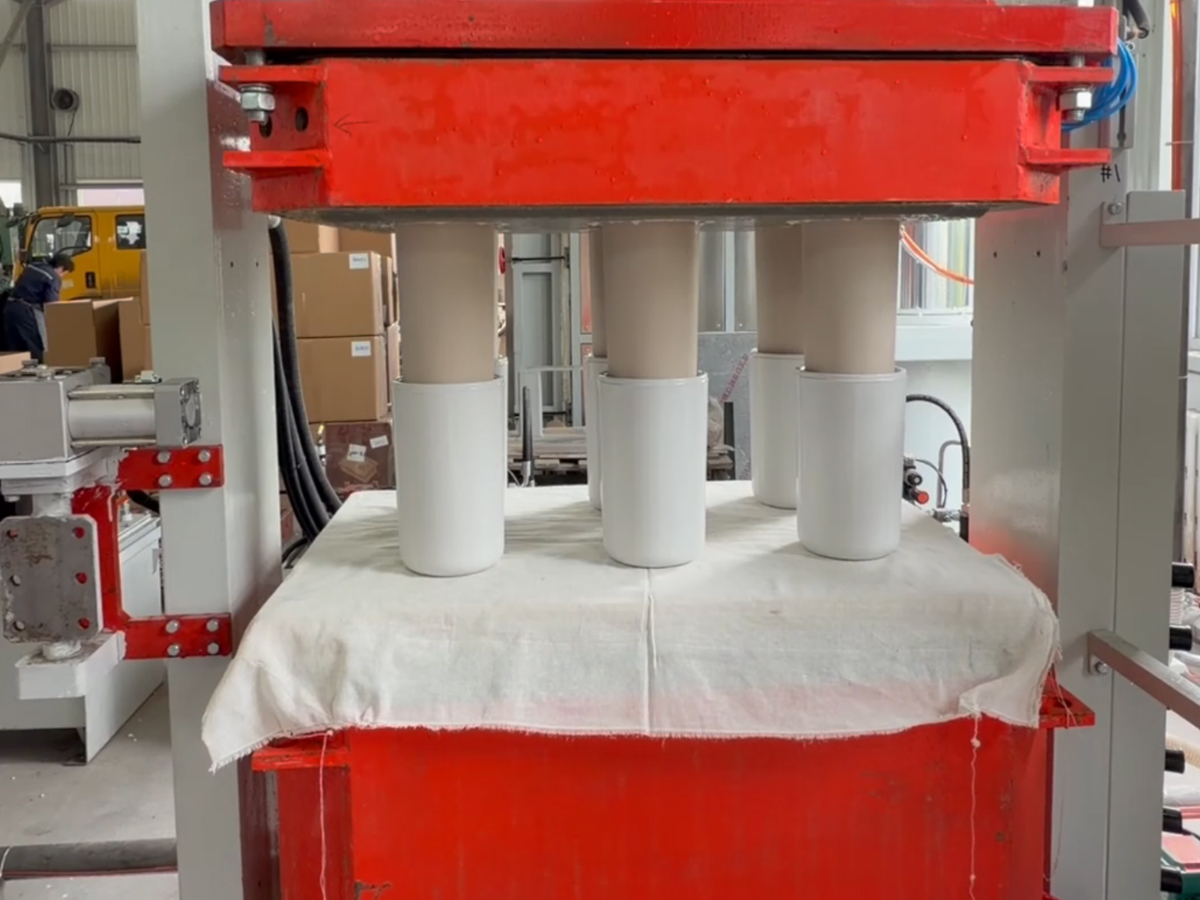 |
3. Early cracks: small stress lines become larger later
Some cracks begin as small stress lines during demolding and are difficult to see. During drying shrinkage and firing shrinkage, these cracks may expand. Digitalfire’s slip casting reference notes that a good casting slip requires the right specific gravity, deflocculation and strength to hold together as it pulls away from the mold. This shows that demolding cracks are often linked to slip condition, mold behavior and demolding timing.
Slip control: Stabilize density, flowability, deflocculation and particle distribution. Demolding timing: Avoid removing the body when it is too wet or too weak. Mold design: Optimize demolding angle, parting lines and edge transitions. Handling method: Control force direction and avoid pulling, impact or compression. Support fixtures: Use setters or supports immediately after demolding. Traceability: Record demolding time, body condition, mold number and defect location. | 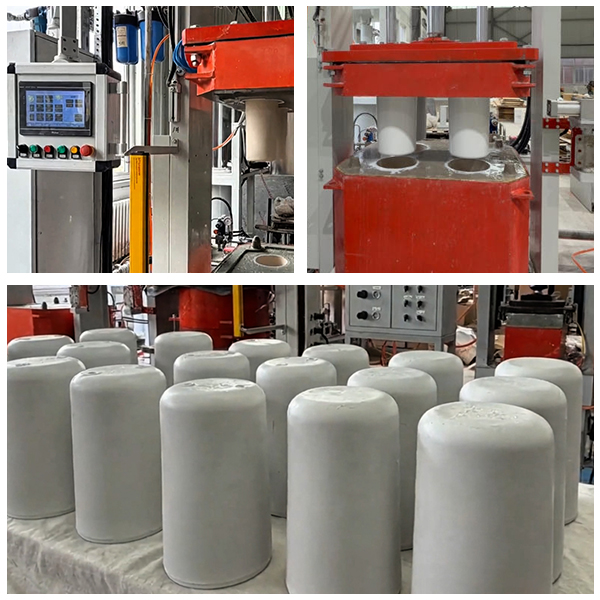 |
Industrial sanitary ware casting systems include mechanically assisted demolding, high-pressure casting and resin mold technologies. robotic casting information also highlights the role of dedicated handling and demolding in precision, repeatability and process quality.
Demolding defects occur when green body strength, mold resistance, demolding timing and support are not properly matched. Edge chipping reflects weak edges. Local deformation reflects poor support and force control. Early cracks show that internal stress has already formed. For ceramic sanitary ware factories, demolding is not a simple handling step after casting. It is a key process that affects drying, firing and first-pass yield.
Q1: Why does edge chipping happen during demolding?
A: Edges are usually thinner and weaker. If demolding is too early, body strength is low or mold resistance is high, rims, holes and corners can easily chip.
Q2: Why are demolding cracks often found later?
A: Small cracks formed during demolding may be difficult to see. Drying and firing shrinkage can open them further, making them visible later.
Q3: What is the most important way to reduce demolding defects?
A: Control demolding timing, improve green strength, optimize mold design and support the body immediately after demolding.