
The H₂ bell kiln, hydrogen kiln technology and low-carbon ceramic firing are becoming important topics in modern ceramic manufacturing. In Issue 2/2026, ceramic forum international (cfi) highlights CTB ceramic technology gmbh berlin’s world-first H₂ bell kiln for firing high-temperature ceramics. According to the report, the kiln can reach temperatures up to 1650 °C and represents a significant step toward the future of high-temperature ceramic firing.
Firing is one of the most energy-intensive stages in ceramic production. Whether for refractory products, technical ceramics, tableware or sanitary ceramics, kiln performance has a direct impact on product quality, production stability and manufacturing cost. Temperature uniformity, firing curve control, atmosphere management and thermal efficiency all determine whether a ceramic body can achieve the required strength, dimensional stability and surface quality. | 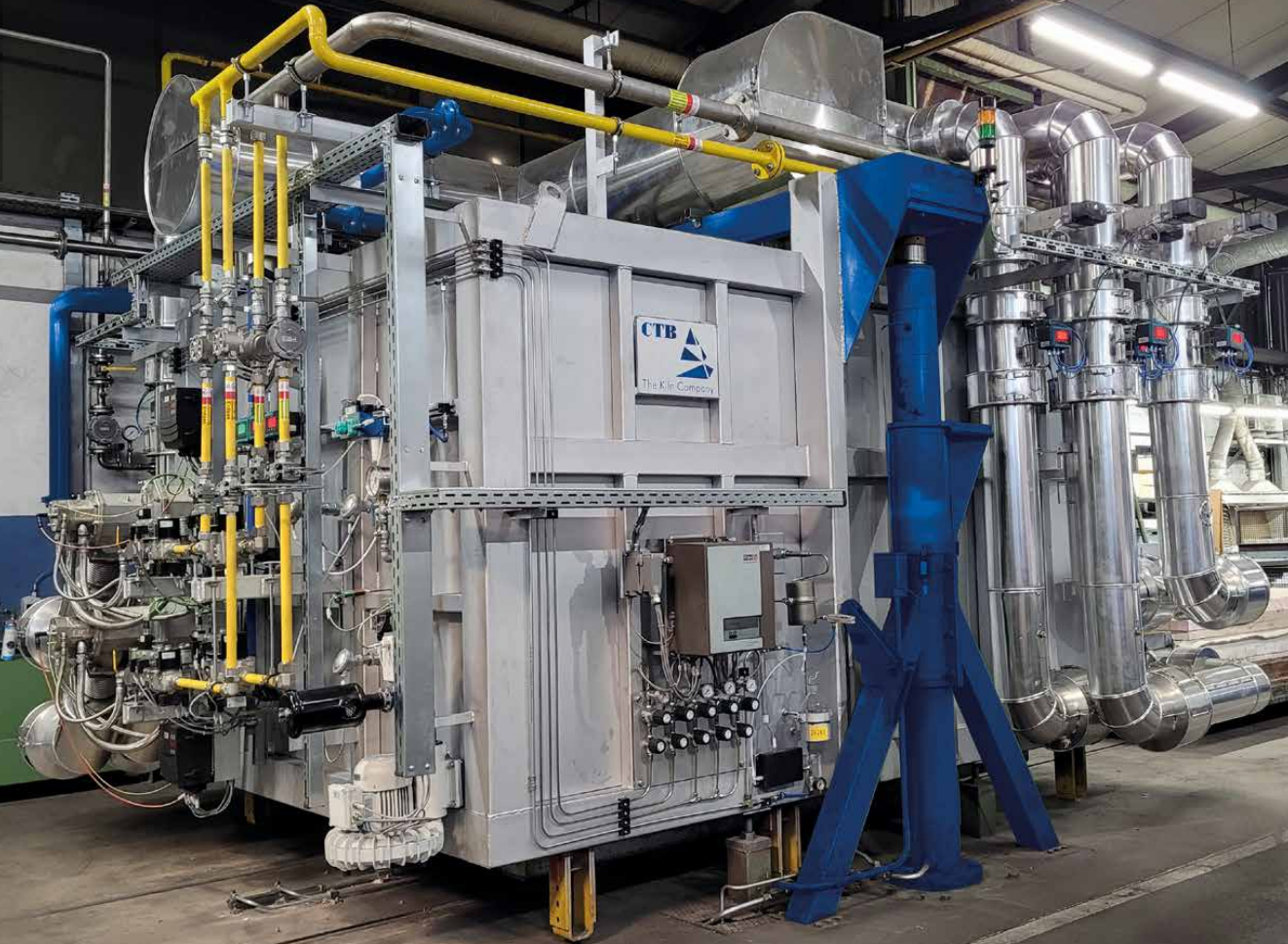 |
At the same time, ceramic manufacturers are under increasing pressure to reduce carbon emissions. This makes kiln technology a key area of innovation. The development of a hydrogen-capable bell kiln shows that ceramic firing is moving beyond conventional fuel systems toward cleaner and more flexible energy solutions.
The importance of CTB’s H₂ bell kiln is not simply that it uses hydrogen instead of natural gas. In high-temperature industrial firing, changing fuel affects the entire thermal process. Burner design, safety systems, combustion behavior, kiln atmosphere, heat transfer, refractory lining and control technology must all be considered together.
Hydrogen has different combustion characteristics from traditional fuels. For a kiln to operate reliably with hydrogen, the system must be engineered for stable flame control, safe operation and repeatable thermal performance. In ceramic production, this is especially important because firing defects can lead to cracking, deformation, color variation, underfiring or overfiring. A low-carbon kiln must therefore be not only cleaner, but also technically stable.
The cfi report notes that CTB’s solution enables flexible operation with pure hydrogen, natural gas or a combination of both. This flexibility is highly practical. For many ceramic factories, the transition to hydrogen will not happen in a single step. It will depend on local energy infrastructure, fuel availability, investment planning and production requirements. A kiln that can operate with different fuel options gives manufacturers a more realistic path toward decarbonization.
Another important point in the report is the modernization of existing firing systems. For ceramic producers, upgrading existing kilns can be more practical than building completely new lines. It may reduce investment pressure, shorten implementation time and allow manufacturers to introduce low-carbon technologies without fully disrupting production.
However, kiln modernization must be treated as a complete engineering project. It is not enough to replace burners or modify fuel supply. Manufacturers must evaluate kiln insulation, temperature distribution, control accuracy, exhaust systems, heat recovery, loading patterns and product-specific firing requirements. The real goal is to combine energy flexibility with stable product quality.
This is particularly relevant for high-temperature ceramics and refractories, where firing conditions are demanding and product failure can be costly. A successful hydrogen-ready kiln must maintain firing consistency over long-term operation, not just reach a target maximum temperature.
CTB’s H₂ bell kiln sends a clear message to the ceramic industry: low-carbon firing is becoming an industrial reality. The future of ceramic kilns will likely be defined by fuel flexibility, advanced combustion control, improved thermal efficiency and stronger integration with digital process monitoring.
For ceramic manufacturers, the lesson is clear. Decarbonization cannot be separated from process engineering. A greener kiln must still deliver stable firing, reliable quality and controllable production costs. Hydrogen technology can be a powerful tool, but its value depends on how well it is integrated into the full ceramic production process.
The world’s first H₂ bell kiln shows that high-temperature ceramic firing is entering a new stage. It is moving from conventional energy dependence toward a cleaner, more flexible and more intelligent manufacturing system. For the ceramic industry, this is not only a technical milestone, but also a signal of where future competitiveness will be built.
资料来源:《陶瓷论坛国际》(ceramic forum international, cfi)2/2026,Editorial by Ulrich Werr。