
Introduction
In the sanitary ware industry, the performance of a flushing system is a definitive metric of a factory’s mastery over material science and precision molding. At Sunlets Technology, we have identified that a "superior flush" is not merely a design feature; it is a sophisticated synergy between hydraulic flow, nozzle geometry, and molding precision.
1. Hydraulic Balance and CFD IntegrationStandard flushing designs often neglect energy dissipation within constrained channels. Through Computational Fluid Dynamics (CFD) modeling, we can precisely predict flow paths along the ceramic inner wall. Our research shows that minor variances in mold precision—as small as 0.5mm—can result in a 15% reduction in kinetic energy, emphasizing the need for surface-tension-optimized glazing. 2. Nozzle Geometry and Turbulence ControlThe secret to flushing efficiency lies in kinetic energy concentration. TopTime’s technical approach optimizes nozzle ejection angles (typically ranging from 12° to 15°) to ensure a stable vacuum in the trapway. By leveraging the Venturi Effect, our nozzle geometries can enhance waste discharge velocity by over 20%. | 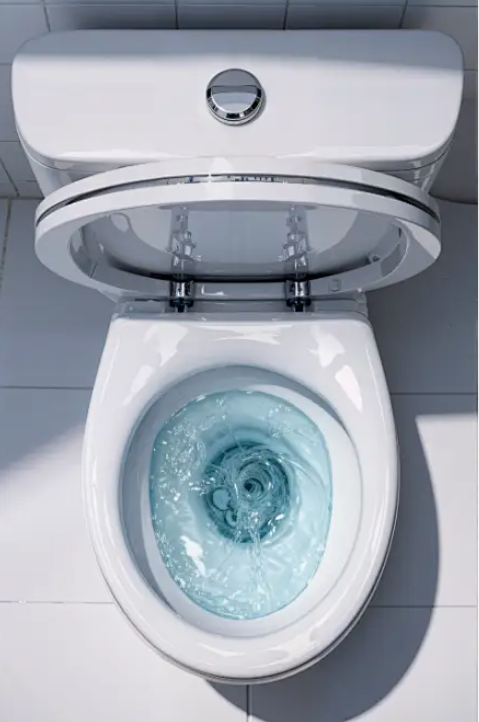 |
3. Molding Precision: The Fundamental Pillar
Molding precision dictates the physical limits of flushing channels. Our experience in high-pressure casting processes demonstrates that controlling mold shrinkage to within 0.1% is essential for maintaining geometric consistency across production batches, thereby minimizing surface friction for optimal flow.
Conclusion
Sunlets provides a closed-loop solution—integrating processes, materials, and equipment—to help our partners achieve peak product performance from mold design to final assembly.