
I. In-depth Understanding of Target Market Culture and Aesthetics
Cultural Research: Conduct research on history, religion, values, and other aspects to understand the cultural background and aesthetic habits of the target market.
Trend Analysis: Pay attention to international design exhibitions, design magazines, social media, and other platforms to understand the latest design trends and popular elements.
Consumer Research: Conduct market research and user interviews to directly understand the aesthetic preferences and needs of target consumers.
Competitive Product Analysis: Analyze the design style and market performance of competitors' products.
II. Adjusting Design Strategies for Different Markets
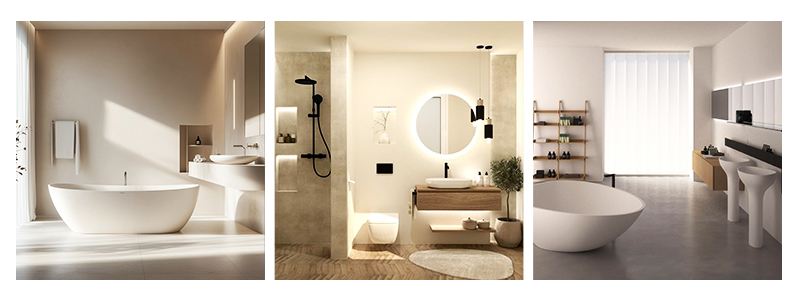
European Market: Prefers simple, modern, and environmentally friendly design styles, focusing on the functionality and quality of products. Common materials include ceramics, stone, and glass, with black, white, and gray being the main colors.
North American Market: Prefers spacious, comfortable, and personalized bathroom spaces. Product design focuses on practicality and comfort, with common materials including ceramics, wood, and metal, and light colors as the primary colors.
Southeast Asian Market: Prefers elegant, exquisite, and exotic design styles. Product design focuses on details and decoration, with common materials including ceramics, wood, and marble, and warm colors as the primary colors.
Middle Eastern Market: Prefers luxurious, grand, and religiously themed design styles. Product design focuses on decoration and carving, with common materials including marble, gold, and gems, and gold and brown as the primary colors.
III. Key Points to Note During the Design Process
Color Matching: Avoid using colors that have negative meanings in the target market.
Shape Design: Avoid using patterns and shapes that are considered taboo in the target market.
Material Selection: Prioritize materials that meet the environmental requirements of the target market.
Functional Design: Adjust the function and size of the product according to the usage habits of consumers in the target market.
Detail Processing: Pay attention to the detail processing of the product to enhance its quality and overall beauty.
Sunlets’ Design Services:
Sunlets has an experienced international design team that can provide professional market research, design consulting, and product customization services based on customer needs, helping customers create sanitaryware products that meet the aesthetics of overseas customers.