
In the asset-heavy, energy-intensive industry of sanitary ceramics manufacturing, managers often face a classic pendulum problem: how to choose between the pursuit of extreme process optimization and strict cost control?
Many businesses are caught up in delaying automation to save money,The result is a vicious cycle of higher total costs due to soaring scrap rates and labor costs. As a technology brand for deep-cultivated high-pressure grouting molding and intelligent manufacturing, we believe that process optimization and cost control are not zero-sum games. On the contrary, high-level process optimization is the ultimate cost control.
I. Breaking through the traditional blind spot: Looking at optimization from the full life cycle cost
Traditional cost controls tend to focus on initial capital expenditures,Such as equipment procurement costs. However, in a 10-15 year plant operating cycle, it is operating expenses that really determine the life and death of a business.
The initial cost of introducing a high pressure grouting system (HPC) is high,However, it can reduce the demoulding time of a single product from several hours to 15-25 minutes.
According to the industry TCO evaluation model, although the initial capital expenditure has increased by about 20-30% through highly automated process optimization,However, due to the reduction of floor space, the increase of mold turnover and the sharp reduction of labor, the operating expenditure of the factory can be reduced by more than 25% in 3-5 years.
Cost control should not be "muscle removal",It should be "fat removal". The purchase of efficient equipment appears to increase initial capital expenditures, but it is actually locking in a competitive advantage in operating expenditures over the next decade.
II. eliminate "invisible waste": reduce costs by increasing the yield rate once
In a ceramic factory,The biggest cost black hole is not the raw material price, but the scrap rate. A toilet that is scrapped after firing not only wastes clay, but also wastes all the energy consumption and labor of molding, glazing, drying and kiln firing.
Through digital pressure compensation and mud rheology adaptive system,Ensure that the internal stress of the green body is uniform. According to [ScienceDirect research on lean manufacturing ], increasing the first-time yield of ceramic manufacturing by 5% can directly increase the factory's profit before interest and tax by 1.5-2%. Every micron increase in process accuracy,The savings on the financial bill are measured in "tens of thousands. Add up the "material loss + energy loss + invalid labor hours" caused by scrap. You'll find that investing in process precision to improve FTT,It is the right decision with the highest return on investment. | 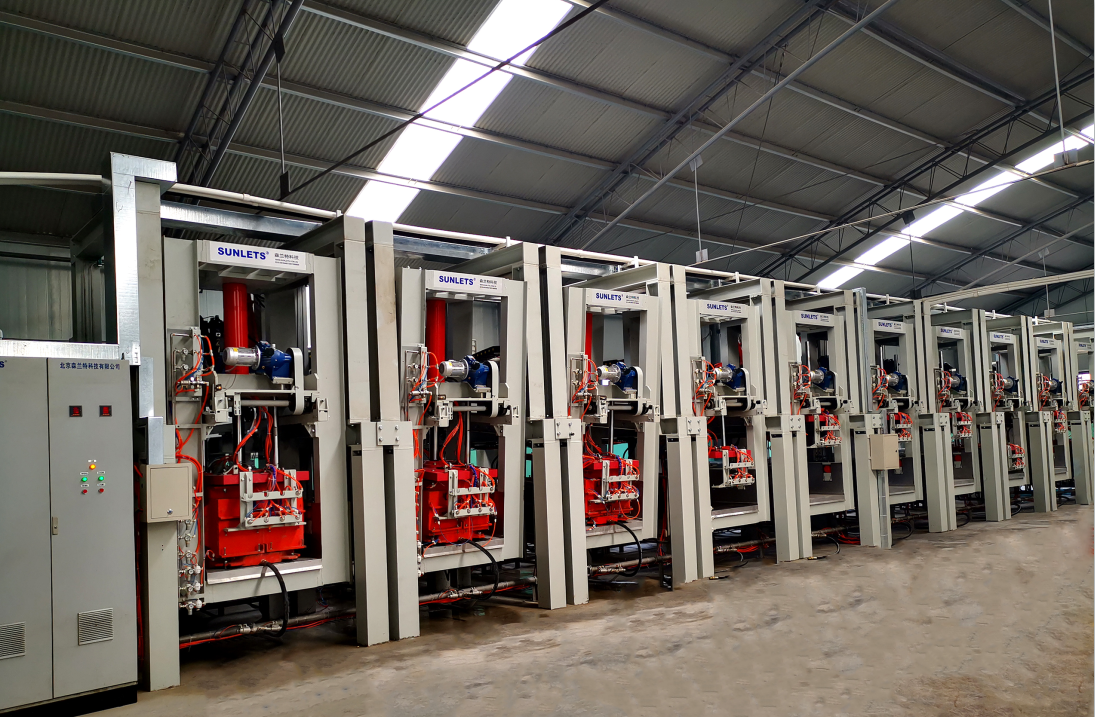 |
III. the precise matching of energy and resources: green technology is financial savings
In the production cost of sanitary ceramics,Energy (gas and electricity) typically accounts for 35-40% of total costs.
Drying and firing optimization: The moisture content of the green body formed by high-pressure grouting is much lower than that of traditional gypsum mold grouting.This means that the amount of water that needs to be removed before the green body enters the drying kiln is reduced by more than 30%.
Thermal energy linkage: Shorten the drying cycle,It means that the energy consumption of the drying kiln is decreased directly. At the same time, the consistency of the body brought about by high-precision molding makes the kiln more compact and more evenly heated.