
Ceramic product development is no longer merely the accumulation of technology and function but an innovative process closely linked to global industrial design trends. Changes in these trends profoundly impact the shape, material, color, functionality, and user experience of ceramic products. This article delves into how current industrial design trends are influencing ceramic product development, and through Sunlets Sanitaryware's practical experience, analyzes how to leverage these trends to create more competitive products.
I. Analysis of Current Industrial Design Trends
Biomimicry: Designing by imitating the structures, functions, and principles of living organisms in nature, emphasizing product sustainability, efficiency, and aesthetics. For example, drainage systems that mimic leaf vein structures, lightweight ceramic materials that mimic honeycomb structures. The global biomimicry design market is projected to reach $4.17 billion in 2023 and grow at a rate of 8.6% annually. (Source: Global Biomimicry Market Report 2023)
Minimalism & Seamless Design: Pursuing simplicity, purity, and smooth lines, emphasizing the integrity and coordination of products. Seamless design emphasizes minimizing connections on products to enhance visual appeal and comfort. Data shows that over 70% of consumers prefer minimalist-style bathroom products. (Source: 2024 China Bathroom Consumer Survey Report)
Digital Native Design: Fully utilizing digital technologies for design, such as 3D modeling, virtual reality, and augmented reality. Digital native design can shorten product development cycles, reduce costs, and provide more personalized customization services.
Inclusive Design: Focusing on the needs of different groups of people, such as the elderly, disabled, and children. Inclusive design emphasizes the usability, safety, comfort, and accessibility of products.
Sustainable Design: Emphasizing the environmental protection, recyclability, degradability, and minimizing the environmental impact of products. Sustainable design has become one of the core principles of global industrial design.
II. Impact of Industrial Design Trends on Ceramic Product Development
Shape Design: Biomimicry inspires the organic shape of ceramic products, and minimalism promotes the smooth lines and simple shapes of ceramic products. For example, Sunlets’ “Water Rhythm” series of ceramic basins adopts a curve shape that mimics the flow of water, creating a natural and dynamic atmosphere. Material Innovation: Sustainable design encourages ceramic companies to develop environmentally friendly ceramic materials, such as reusing waste ceramic materials and using renewable energy for production. Color Matching: Minimalism and seamless design require ceramic products to adopt neutral tones and unified color schemes to create a harmonious and comfortable visual effect. Function Integration: Inclusive design promotes the integration of more functions into ceramic products, such as the automatic cleaning, seat heating, and deodorization functions of smart toilets. | 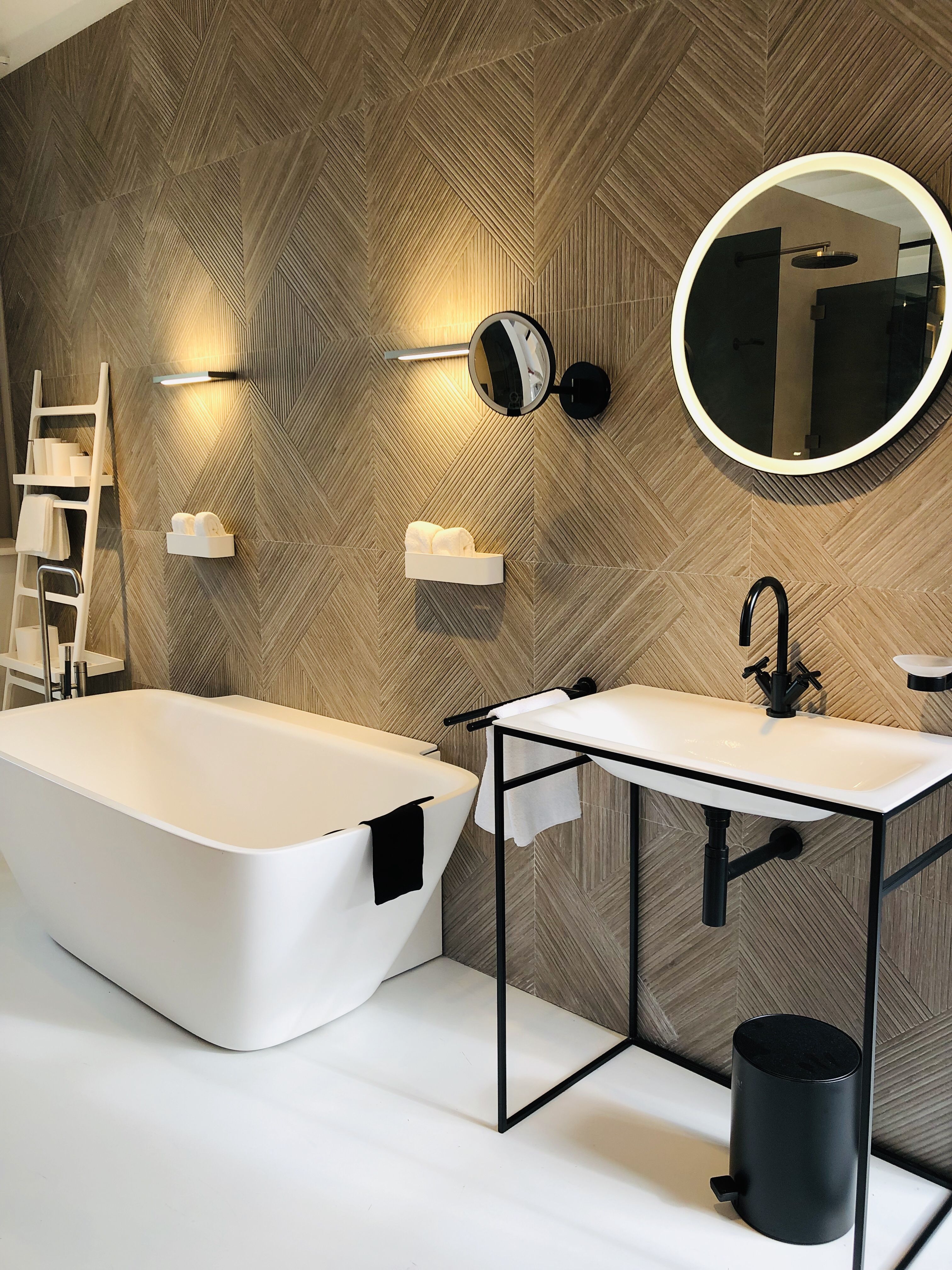 | |
User Experience: Digital native design provides more possibilities for ceramic product development, such as simulating product usage scenarios through VR technology and obtaining user feedback to optimize product design. | ||
III. Sunlets’ Design Practice: Embracing Industrial Design Trends and Leading Ceramic Product Innovation
Sunlets Sanitaryware closely monitors global industrial design trends and applies these trends to ceramic product development:
Established a Dedicated Design Innovation Center: We have a team composed of senior designers and engineers dedicated to researching industrial design trends and product innovation.
Collaborated with International Renowned Design Agencies: We have established long-term cooperative relationships with renowned design agencies from Europe, Japan, and other countries to jointly develop ceramic products with international leading levels.
Adopted Advanced Digital Design Tools: We introduced advanced digital design tools such as 3D modeling, VR, and augmented reality to improve product development efficiency and quality.
Focused on User Experience Research: We regularly conduct user research to understand consumer needs and pain points, and incorporate this feedback into product design.
IV. Future Outlook
In the future, industrial design trends will continue to have a profound impact on ceramic product development. Ceramic companies need to continuously innovate, embrace new technologies and ideas, in order to stand out in fierce market competition. Sunlets Sanitaryware will continue to adhere to the design philosophy of "people-oriented, innovation-driven," to provide consumers with more quality, more personalized, and more sustainable ceramic products.