
Introduction: Why 90% of high-end designs fail in the proofing stage * * In the sanitary ceramics industry, the "minimalism, thin wall and large size" pursued by designers are often nightmares at the manufacturing end. Traditional gypsum molding due to its uneven dehydration and insufficient strength, in dealing with complex geometry, the rejection rate is often as high as 30%.Sunlets redefined the output standard of samples by pre-empting the high-pressure grouting technology into the R & D stage.
I. Case Background: Challenges of Large Shower Base
Customer Requirements: A top European bathroom brand requested to develop an ultra-flat shower base with a size of 1600mm x 900mm,The flatness error is required to be less than 2mm and must be adapted to automated production. Shrinkage control: The stress of large-size products in the drying stage is extremely concentrated. Slurry flow: such a large surface area, but also to ensure that the mud in the mold does not produce bubbles and the wall thickness is completely consistent. | 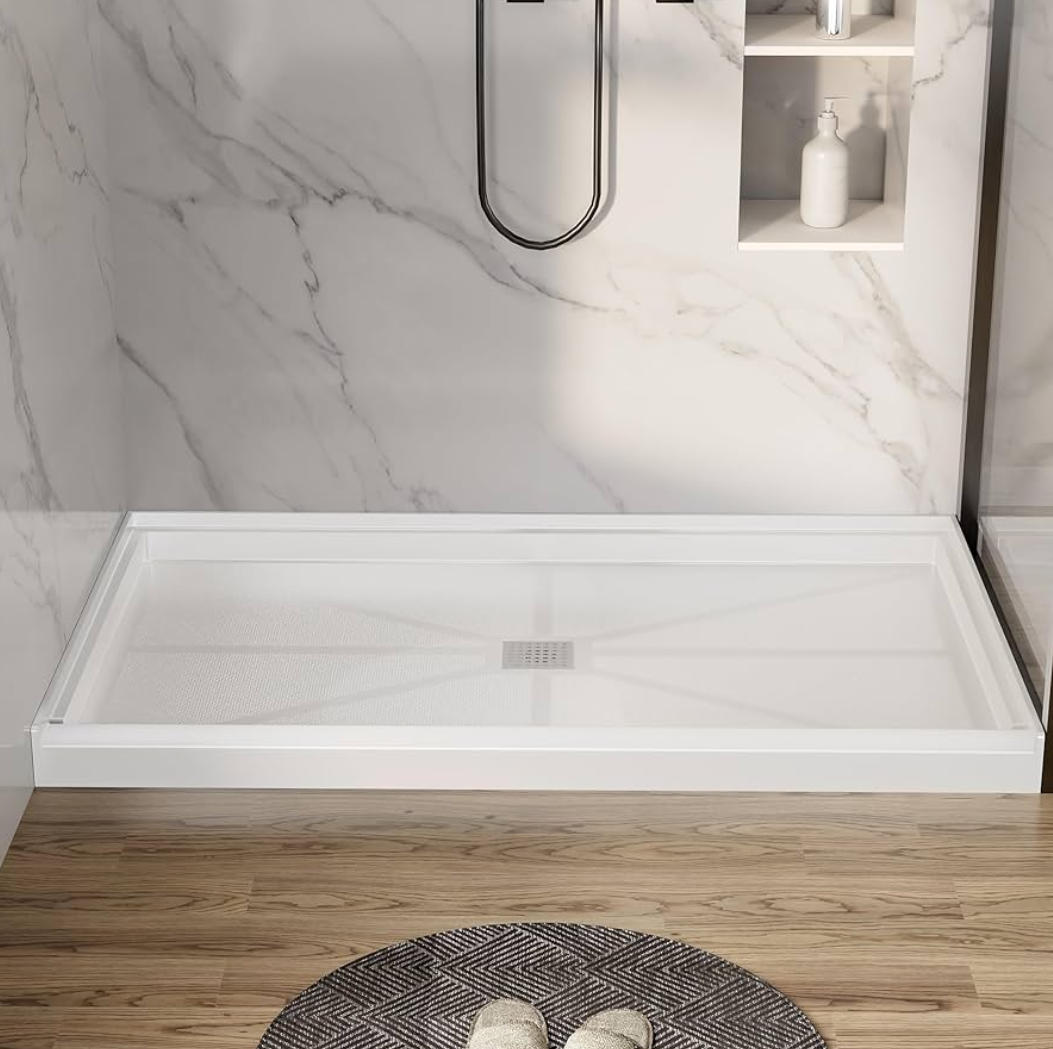 |
II. Solution: Data-Driven Development Path
1.Digital simulation and stress prediction
Before the mold opening, we analyze the filling process of the simulated mud under the pressure of 1.2 MPa.
Insight: We found that by adding a specific proportion of organic plasticizer to the sizing agent, the microscopic pore structure of the filter cake can be modified.
Data support: analog display,The optimized formula improves the uniformity of drying stress distribution of large parts by 28%, and effectively prevents the "warping" phenomenon in the later firing.
2. Precision manufacturing of high pressure resin mold Different from the traditional process, we use five-axis CNC to directly process the working die. Precision control: The size compensation of the mold cavity is accurate to 0.01mm, to offset the comprehensive shrinkage rate of 12.5. Drainage design: According to the material characteristics, we designed an asymmetric drainage matrix on the back of the mold to ensure that the dehydration rate of large-area products is synchronized. 3. | 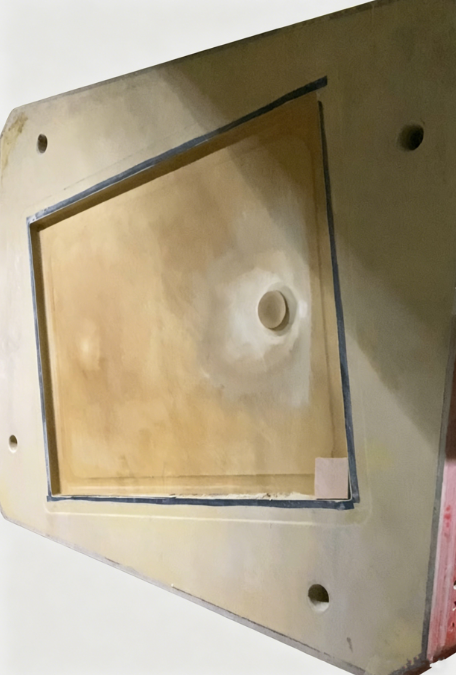 | |
3.Sample production and physical verification The first sample pressing is carried out on our high pressure grouting machine equipment. Molding pressure: Adopt stepped pressure increase (0.2-1.5 MPa) to ensure that the slurry is gentle and full of every corner. Results: The first sample reached 95% of the design reduction degree, and the flatness error was controlled within 1.5mm, which was far better than the industry standard. |
III. Conclusion: The secret to shortening the time to market
As can be seen from this case,The output of high-end samples is no longer repeated "trial and error", but based on data and advanced equipment "empirical". Sunlets reduces the development cycle by 40%, ensuring that customers' designs can seize the market as quickly as possible.